Engage Participants and Strengthen the Brand Through Active Co-Creation


Engage Participants and Strengthen the Brand Through Active Co-Creation
When planning events, conferences, or campaigns today, success is no longer defined by delivering a polished product to a passive audience. Modern participants expect to be involved — to help shape the experience itself. Active co-creation has become a cornerstone of contemporary event design and brand development because it fosters engagement, ownership, and authentic relationships between organizers and participants.
But how do you turn co-creation from a buzzword into a concrete strategy that enhances both the experience and the brand? Here’s how you can engage participants before, during, and after your event — and create value that lasts long after the lights go out.
From Audience to Co-Creators
Traditionally, events have been built around a clear division: organizers plan, and participants attend. Co-creation breaks that structure. Instead, participants are invited to contribute ideas, content, and energy, becoming an active part of the process.
This can happen at multiple stages:
- In the ideation phase: Invite potential participants to suggest themes, speakers, or activities through social media or an online platform.
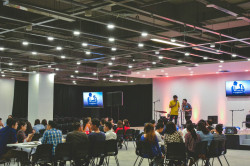
- During the event: Create formats where participants can share experiences, ask questions, or develop solutions together — for example, through workshops, open forums, or interactive installations.
- After the event: Involve participants in the evaluation and planning of future events. This not only provides valuable insights but also builds loyalty.
When participants see that their input matters, their engagement deepens — and they become ambassadors for your brand.
Co-Creation as a Brand Strategy
Co-creation isn’t just about creating a great experience in the moment. It’s also a strategic tool for strengthening brand credibility and relevance. A brand that dares to give space to its community’s voice signals openness, trust, and collaboration — values that resonate strongly with today’s consumers.
By actively involving participants, you gain access to valuable knowledge about their needs, motivations, and aspirations. This insight can inform the development of products, services, and communications that connect more precisely with your audience.
Consider events where participants help shape the content — by pitching ideas, voting on topics, or sharing their own stories. In these cases, the brand becomes a platform for shared development rather than a one-way broadcaster.
Læs også:

Designing the Framework for Creative Participation
Co-creation doesn’t happen by accident. It requires thoughtful planning. Simply saying “get involved” isn’t enough — participants need clear frameworks and tools to contribute meaningfully.
When designing your event, consider:
- Clear purpose: What are participants being invited to create — and why?
- Defined roles: What kind of input is expected, and how will it be used?
- Facilitation: Ensure there are hosts or moderators who can guide the process and make sure every voice is heard.
- Visible impact: Show how participants’ contributions lead to action — through summaries, reports, or concrete follow-ups.
When participants can see that their efforts make a difference, their motivation increases dramatically.
Digital Tools as Catalysts
Digital platforms make it easier than ever to involve participants — before, during, and after an event. Online polls, idea boards, live Q&A sessions, and social media can all be used to create dialogue and community across time and space.
A simple hashtag can unite participants around a shared story, while a digital whiteboard can collect ideas in real time. The key is to ensure that technology supports the purpose — not the other way around.
When used effectively, digital tools can extend the life of your event and nurture a community that continues to grow long after the event ends.
Measure the Impact — and Learn from the Process
Co-creation is a dynamic process, and organizers learn along the way. Don’t just evaluate satisfaction — measure engagement and the quality of the ideas that emerge.
Ask yourself:
- How many participants actively contributed to the co-creation process?
- What new perspectives or solutions emerged?
- How did it affect the brand’s reputation and relationship with participants?
By measuring and reflecting, you can continuously refine your approach and achieve even stronger results next time.
A New Way to Think About Ownership
At its core, active co-creation is about sharing ownership of the experience. When participants feel they’ve left their mark on an event, it’s no longer just “your” event — it becomes “our” event.
That shared sense of ownership builds a deeper connection between brand and participant, grounded in mutual values and experiences. And in a time when authenticity and community matter more than ever, that kind of relationship is truly invaluable.
Læs også: